Office Clearance in Stratford

Office clearance in Stratford needs to be handled with care, clear planning and the right separation of items from the outset. We help businesses and organisations clear workspaces in a way that keeps the process organised, from individual rooms and storage areas through to complete office floors. The service is suitable where furniture, archive materials, fittings, mixed equipment or general contents need to be removed in a structured way, while useful items are sorted and waste is dealt with responsibly.
Because every workplace contains a different mix of items, our approach is shaped around access, volume, item type and any materials that need special handling. We can work through desks, chairs, cabinets, shelving, meeting rooms, reception areas and back-office storage, with a focus on keeping disruption low and the job manageable. If you are comparing options for a professional office clearance, the key is to match the service to what actually needs removing, not to overpay for unnecessary work.
For many customers, the first step is simply to decide what stays, what goes and what may be worth separating for reuse or recycling. That clarity makes the rest easier, especially when a workspace contains older furniture, box files, loose items and equipment spread across several rooms. You can use this page to understand the main service and then request a quotation when you are ready.
What our office clearance service can cover
Office clearance is rarely just about removing desks. A sensible service should also account for cupboard contents, pedestal units, shelving, display boards, kitchen or breakout items, and anything else that has built up over time. We handle clearances that involve single departments as well as larger spaces, and we can work to a sequence that suits the building, whether items need to be taken from one room at a time or from multiple areas in a planned order.
Where relevant, we also separate items that can be reused from those that need recycling or disposal. That may include office chairs, filing cabinets, screens, tables, IT peripherals and mixed contents that have been stored during a move, closure or refurbishment. If you need to clear an office floor in Stratford, it helps to think about the clearance as a practical sorting job as well as a removal job, because the way items are handled affects both the result and the time required.
Typical office clearance work may include:
- desks, chairs and meeting-room furniture
- filing cabinets, shelves and storage units
- boxes, paper records and general contents
- small office equipment and accessories
- mixed clear-outs from reception, back office or stock rooms
Working through furniture and fittings
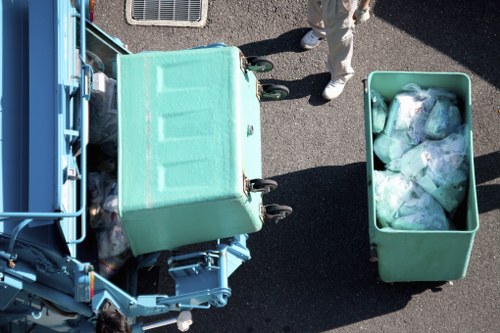
Furniture often forms the largest part of an office clearance, and it usually needs the most careful removal. Bulky items can be awkward in shared corridors, stairwells and lift access, so planning how they leave the premises matters. We can remove standard office furniture and other large items in a practical order, helping you avoid a pile-up at the end of the job and making it easier to keep remaining areas usable while the work is under way.
Some clearances involve items that are still in reasonable condition, while others are simply worn out, mismatched or no longer needed after a reorganisation. In either case, the aim is to deal with them properly rather than leave them sitting in the workspace. If you are arranging a furniture clearance alongside the office job, this can be a useful way to keep the work focused on the items that are taking up the most room and slowing down the next stage.
Furniture removal may also need to take account of fixings, modular parts and combinations of items that have been joined together over time. We can work with desks and storage that need disassembly before they can be moved, and we can include pieces from breakout areas, meeting rooms and waiting spaces when they form part of the same clearance. The aim is a tidy result that leaves the space ready for whatever comes next.
Clearance for business premises and mixed office sites
Not every office clearance happens in a single self-contained suite. Some businesses use shared premises, upper floors, converted buildings or mixed commercial spaces where office contents sit alongside stock, documents or equipment from other activities. In those settings, it helps to have a clearance plan that distinguishes the office area from the rest of the building, so the removal work stays targeted and practical rather than becoming a general tidy-up across unrelated spaces.
Where a site has multiple departments or a sequence of rooms with different uses, the clearance may need to be staged. We can approach that sort of job in a way that respects the layout of the premises and the order in which areas need to be emptied. If you need business waste removal as part of a broader clear-out, this can sit alongside the furniture and contents work without turning the job into separate, disconnected visits.
Commercial premises also vary in the kind of waste they generate, from old stationery and packaging through to broken fixtures and redundant office hardware. A sensible service keeps those items moving in the right direction, rather than mixing everything together and creating more sorting later. That is particularly useful where a business is preparing a handover, reorganising space or reducing the amount of furniture kept on site.
How office items are sorted and removed

Good clearance work is not only about lifting items away; it is also about sorting them in a way that makes the outcome more useful. Some items are clearly ready for disposal, while others may be suitable for reuse, resale, recycling or separate handling. The more clearly items are grouped at the start, the easier it is to move through the workspace in an orderly fashion and avoid unnecessary backtracking during the clearance.
Office clearances often involve a mixture of light and bulky materials. That can include cardboard, paper archives, chairs, metal storage, laminate desks and small loose items from drawers or cupboards. When these are collected together, it is usually more efficient to separate them into practical categories before removal. If you are also dealing with a waste removal requirement, this can help ensure the final load is suited to the right disposal route rather than being treated as a single mixed pile.
At this stage, it is also sensible to think about anything with a particular disposal requirement, such as sensitive records, awkwardly shaped items or material that should not be put out with ordinary rubbish. Clear categorisation makes the difference between a rushed tidy-out and a well-managed clearance. It also helps when you want to keep the job focused on the office items that matter most, rather than pulling in everything at once.
Before the clearance begins
The most useful preparation is usually to identify what must remain on site and what can be removed. If the job involves several rooms, it helps to mark or separate the items that should not be taken, especially where furniture, paper records and small equipment are mixed together. Photographs or a basic list can be helpful when you ask for a quotation, because they allow the scope to be understood before the work begins and reduce the chance of avoidable surprises.
Access is another practical factor. A clear note of stairs, lifts, loading arrangements, parking constraints or restricted entry times can make it easier to plan the job in the right order. If you are arranging a quotation for an office clearance enquiry, it is often worth mentioning the approximate size of the workspace and whether the clearance needs to happen around staff, tenants or building rules. That keeps the conversation focused on the real job.
Once those basics are known, the service can be matched more closely to the premises and the quantity of items involved. In commercial clearances, this planning step often saves time later, because there is less need to pause and re-check what should stay and what should go. It also gives you a clearer view of the likely work involved before anything is moved.
Office clearances for moves, closures and refurbishments
Office clearance is often needed at a transition point. A business may be moving to a different address, closing one part of a site, refurbishing a floor or simply reducing the amount of furniture and contents kept in use. The service needs to fit the purpose of the clearance, because an office being vacated completely is handled differently from a room that is being emptied for works and then put back into use.
If your project includes redundant items from a change of layout, the job may involve a mixture of small pieces, larger furniture and contents that have become surplus to requirements over time. In that context, a targeted clearance helps keep the project moving. Where suitable, we can also support linked household-style clearances, such as home clearance or house clearance, when a wider change means both domestic and commercial contents need attention, although each type of job is still planned separately.
For refurbishments, timing matters as much as the items themselves. Rooms often need to be emptied in stages so that contractors can access the area without obstruction. A well-planned clearance helps create that sequence. It also means the remaining items are less likely to be mixed in with the things leaving the building, which is especially important when there is furniture, office supplies and archived paper all stored in the same place.
Handling storage rooms, lofts and secondary spaces

Many offices accumulate more than just the contents of the main workspace. Storage rooms, cupboards, lofts and underused corners often end up holding spare chairs, empty boxes, old paperwork, outdated displays and items left over from previous setups. These spaces can take longer to clear than expected because the contents are often compacted together, and it may not be obvious what is useful until the items are brought out and sorted properly.
If your building includes an attic or upper storage area, a separate loft clearance may be useful where the clearance is not limited to desks and cabinets. Likewise, if the job extends into archive spaces, spare rooms or overflow storage, those items can be included as part of the same overall plan. The main point is to avoid leaving the less visible spaces until last if they contain the items that are most likely to delay the handover or refurbishment.
These secondary areas are often where the most mixed material appears, because they have collected items from different stages of the business over time. A careful approach keeps the job practical and prevents useful items from being removed in error. It also makes the office feel properly cleared, rather than just partially emptied, which matters when you are trying to close off a project cleanly.
Pricing factors and quotation details
Office clearance pricing usually depends on the amount of material to be removed, the type of items involved, access to the building and how much sorting is needed on site. Furniture, loose contents, boxed paper and mixed office waste all place different demands on the job, so it is useful to describe the clearance accurately rather than assuming it can be priced from floor size alone. A straightforward enquiry helps create a more realistic quotation from the outset.
Where a clearance includes several categories of item, the most helpful details are usually a description of the contents, the number of rooms or areas involved, and whether anything is unusually bulky or awkward to move. If you are ready to compare the work with published information, you can review pricing and quotes alongside the service pages to understand how a quotation is prepared. Then, when you make contact, the focus can stay on the actual clearance rather than on guessing the scope.
It is also worth remembering that quotation requests tend to work best when the priority is accuracy, not speed alone. A clear description of the site and contents helps avoid revisions later. That is especially true for offices with multiple storage points, shared access or items that must be separated before removal. Better information usually means a cleaner plan for the work and a more useful price discussion.
About Stratford
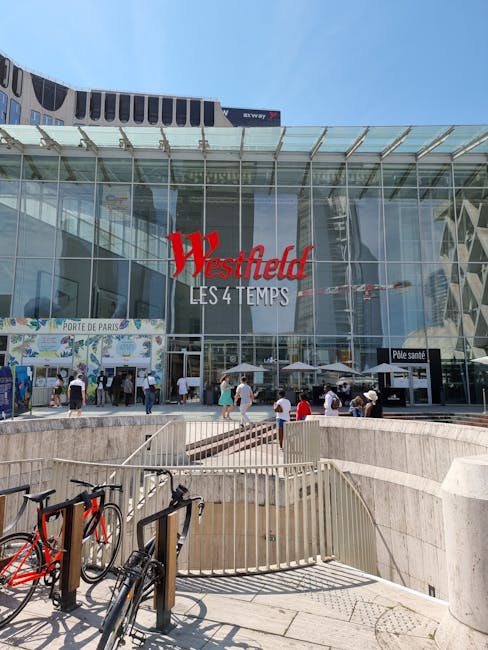
Stratford is a well-known area in East London, lying within the London Borough of Newham and shaped by a long history of change from market town and industrial suburb to a major centre of redevelopment. The district is closely associated with the Lea Valley, whose waterways, marshes and transport routes have influenced how the area developed over time. Stratford station has become one of the most significant transport interchanges in London, bringing together rail, Underground, Overground and DLR connections and making the area especially accessible from across the capital and beyond. The nearby Queen Elizabeth Olympic Park is one of Stratford’s best-known landmarks, created for the 2012 Games and now a large public park with venues, pathways, planting and open spaces that have changed the character of the wider district. Westfield Stratford City has also become a major retail and leisure destination, adding a large contemporary commercial complex to an area that already contained older streets, civic buildings and mixed-use development. Stratford’s built environment shows striking contrasts: regenerated public spaces sit close to surviving historic fragments, busy roads, residential estates and newer towers. The area has continued to evolve through transport investment, cultural redevelopment and new housing, while still retaining its identity as a place with strong connections to the river valley, the East End and the wider movement of people and goods through London. This layered setting gives Stratford a distinctive urban texture, with parks, shopping streets, venues and transport links all contributing to its present-day character.
Office clearance for recurring contracts and one-off jobs
Some customers need a one-off clearance, while others require a repeat service for changing office contents, archived material or surplus equipment. The right approach depends on whether the workspace is being emptied once, refreshed periodically or maintained after a larger reorganisation. We keep the service flexible enough to suit different patterns of use, so the clearance can match the rhythm of the premises rather than forcing everything into the same format.
In some cases, a business may only need a partial removal, such as a single room, one department or a selected group of items that are no longer wanted. In others, the job may involve several linked spaces that need to be dealt with in sequence. If furniture forms a substantial part of the clearance, it may be useful to look at office clearance details again in relation to the exact scope of the workspace, because a whole-floor clear-out, a storage-room sort and a single-room removal can all need slightly different planning.
Whatever the scale, the aim remains the same: clear the relevant office contents in an orderly way and leave the premises ready for the next stage. That might mean handover, refurbishment, restructuring or simply a better use of space. When the work is matched properly to the site, the end result is easier to manage and simpler to explain to everyone involved.
Useful decisions for business owners and facilities teams

When deciding how to proceed, it helps to identify the items that carry the most weight in the job: large desks, storage, archive boxes, mixed waste or awkward equipment. That simple prioritisation gives the clearance a practical order. It also helps facilities teams, landlords and business owners agree what is part of the scope and what remains outside it. In workplaces with shared responsibility, that clarity can save a great deal of back-and-forth later.
For linked site work, some customers also need clearance of garages, sheds or outside storage areas connected to the office or premises. Where that is relevant, a separate garage clearance may be worth considering as part of the wider plan. The same applies to surrounding external areas if they contain discarded equipment, old furniture or leftover materials that are not part of the main office but still need removing before the site can be signed off.
If you would like to move forward, send the basic details of the space and the items involved, and we will shape the quotation around the actual job. A concise enquiry is usually enough to start the process, especially if the office contains a mix of furniture, contents and stored material. You can then compare the scope, choose the right service and request a quotation when the timing suits you.